TOPCon Cells
High volume resistivity limits sodium-ion migration, protecting passivated contacts from power loss under system voltage.

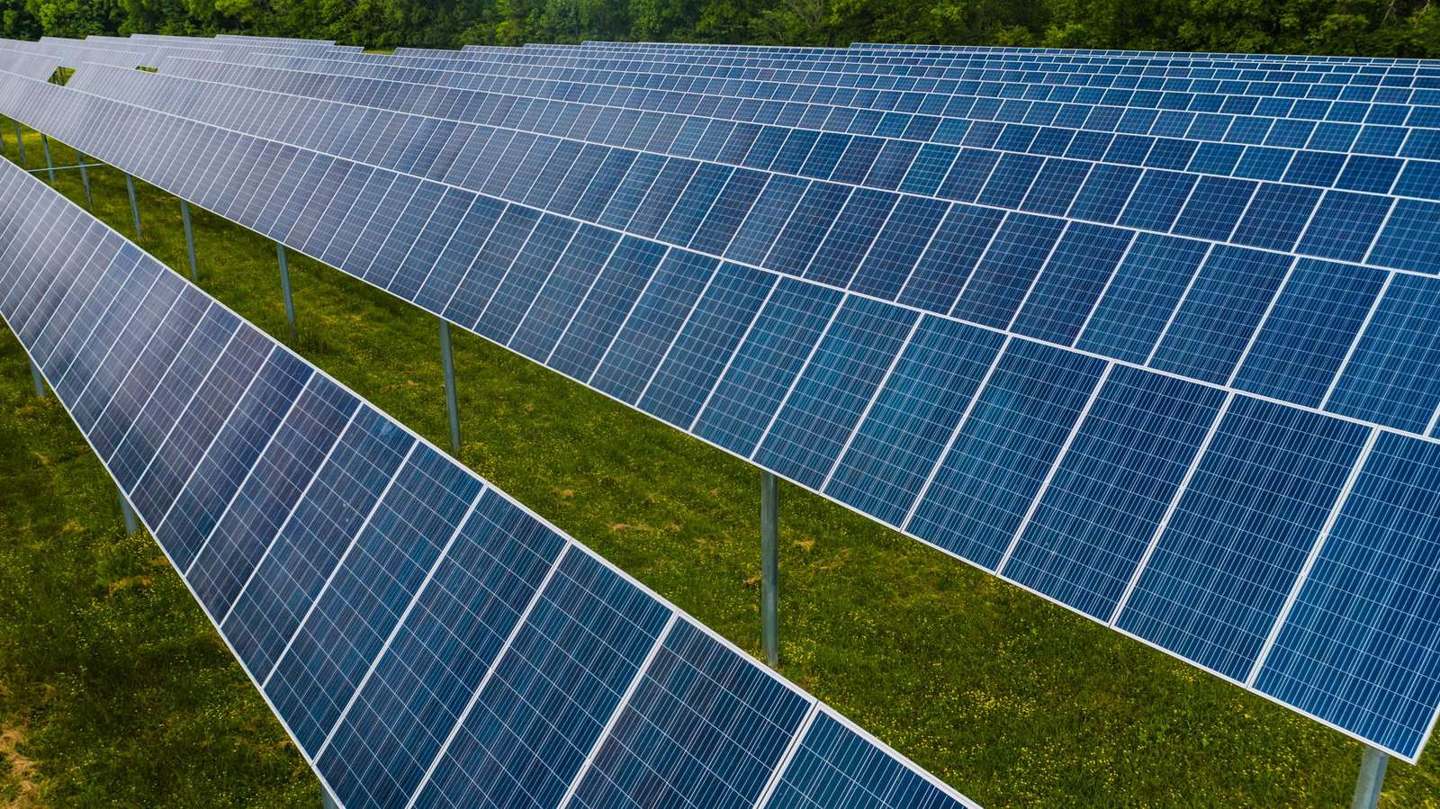
POE encapsulant film from Bouling Chemical Co., Limited for photovoltaic module makers. A polyolefin-based encapsulant with low water vapour transmission, high volume resistivity and no acetic acid release, qualified for TOPCon, HJT and bifacial glass-glass designs.
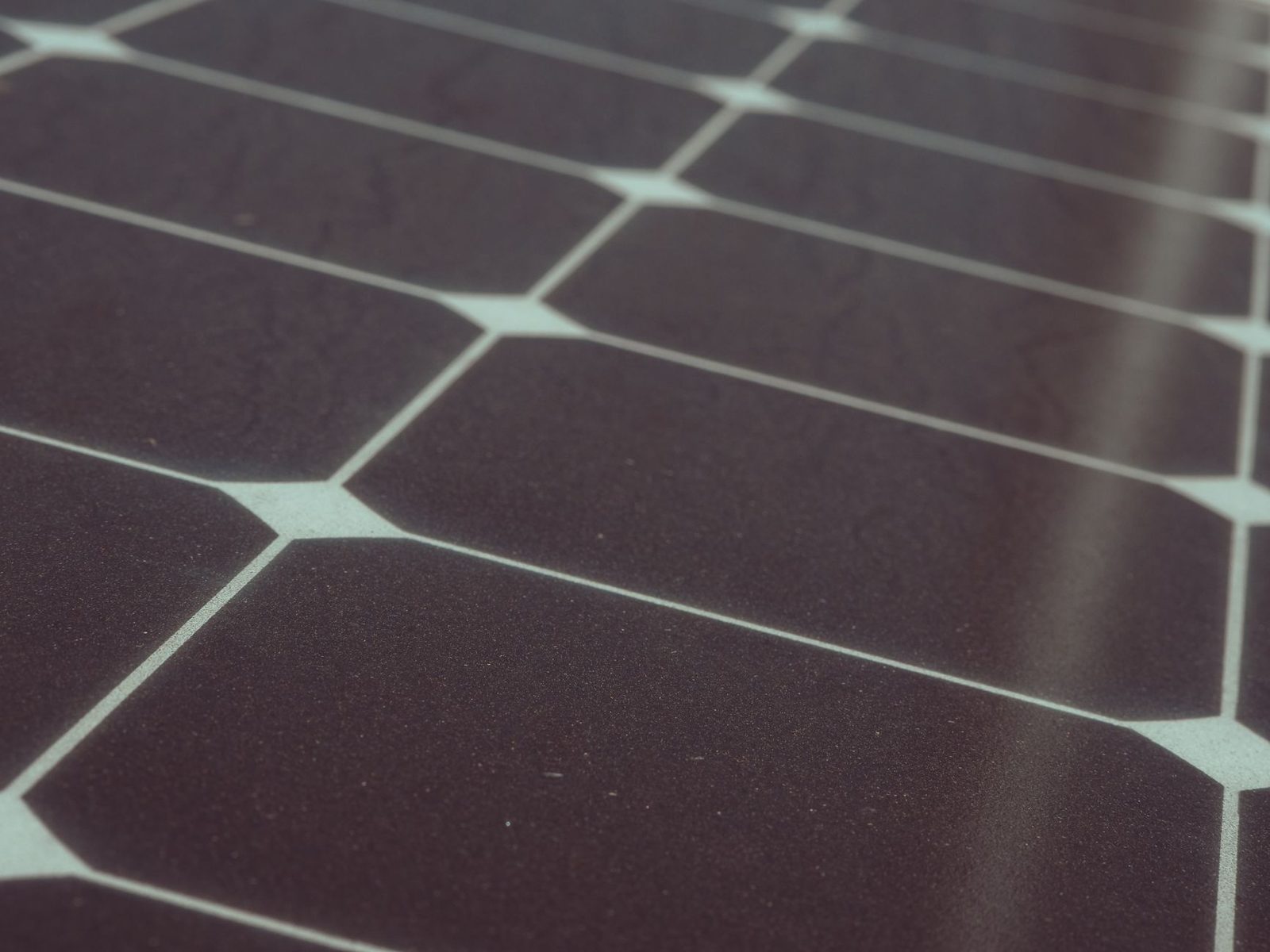
POE encapsulant film is a polyolefin elastomer layer placed between glass, cells and backsheet in a photovoltaic module. It bonds the stack, insulates the circuitry and protects the cells from moisture. Compared with EVA, its saturated olefin structure has no hydrolysable ester groups, so it does not generate acetic acid under damp heat.
The result is a module with lower water vapour ingress and higher volume resistivity, which reduces the risk of potential-induced degradation. That matters most for high-efficiency cell types and dual-glass constructions, where long-term power retention depends on the encapsulant staying clear and insulating.
Chinas photovoltaic encapsulation industry has several established film producers, including Hangzhou First Applied Material Co., Ltd., Shanghai HIUV New Materials Co., Ltd., Jiangsu Sveck New Material Co., Ltd. and Suzhou Cybrid Applied Technology Co., Ltd. Bouling Chemical Co., Limited works alongside this supply chain, providing POE encapsulant film to module assemblers who need documented material performance and batch consistency.
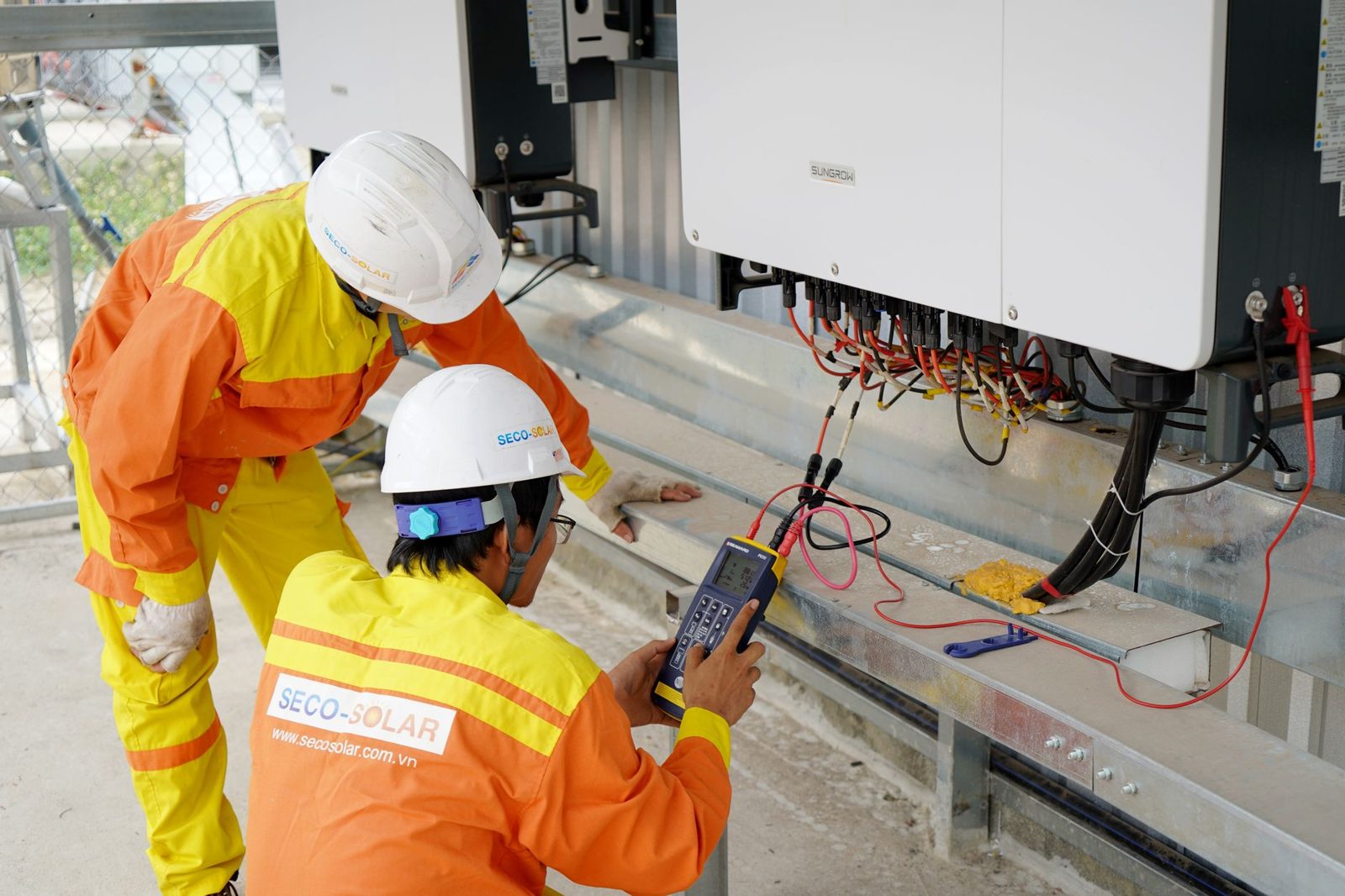
Attributes buyers check first when qualifying a POE encapsulant source.
| Product name | POE encapsulant film |
|---|---|
| Base resin | Polyolefin elastomer (POE) |
| Structure | Ethylene and alpha-olefin copolymer |
| Ester groups | None - no acetic acid formed |
| Water vapour barrier | Low WVTR, about one eighth of EVA |
| Volume resistivity | High, above 1 x 10^15 ohm cm |
| PID resistance | Strong anti-PID performance |
| Light transmittance | High, above 91 percent in 380-1100 nm |
| Module compatibility | TOPCon, HJT, PERC, bifacial, glass-glass |
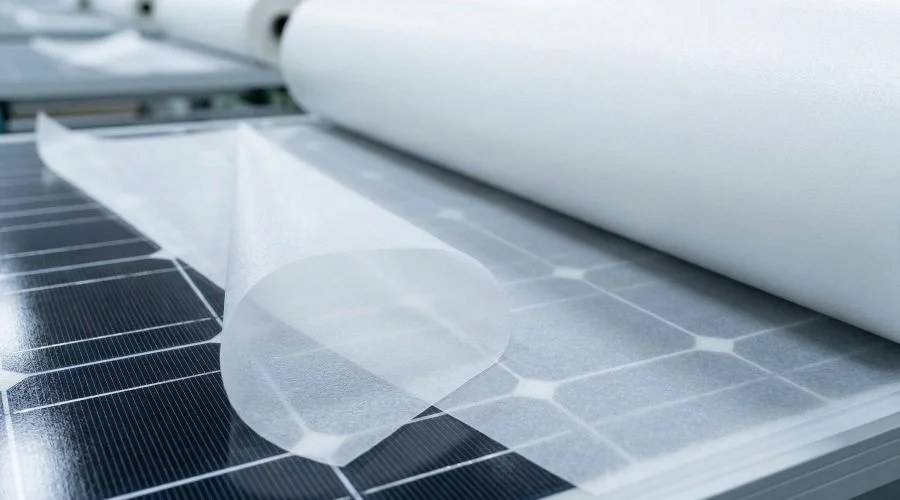
POE encapsulant is specified where moisture and PID resistance decide module lifetime.
Used on both sides of glass-glass modules, where near-zero water ingress and stable insulation protect the rear cell surface over a 30-year service life.
High volume resistivity limits sodium-ion migration, protecting passivated contacts from power loss under system voltage.
Low-temperature lamination and low shrinkage suit temperature-sensitive heterojunction cells.
Thermoplastic grades encapsulate moisture-sensitive layers without high-temperature curing.
UV-cut POE variants shield the backsheet while keeping high visible-light transmission.
From utility-scale ground mounts to rooftop arrays, POE film helps keep power degradation low in hot and humid climates.
Film is shipped as wound rolls with moisture-protective wrapping and batch identification.
Encapsulant film is wound onto cores and sealed to keep the surface clean and dry before lamination.
Each roll is wrapped in a moisture-barrier bag with desiccant, then packed to prevent deformation in transit.
Roll labels carry the product grade, production lot and date so every delivered roll can be traced to its batch file.
Rolls are palletised and loaded into containers, with the packing list and seal numbers supplied with the shipment.
Each lot is checked before release, and the documents travel with the goods.

Encapsulant film is sampled at production for optical, electrical and lamination checks. A retained sample from the shipped lot is kept until the buyer accepts the goods, so any query can be traced back to the exact roll.
Common points raised when a module maker evaluates POE film.
EVA contains acetate groups that can hydrolyse into acetic acid under damp heat. POE is a saturated polyolefin with no such groups, so it releases no acetic acid and keeps volume resistivity high, which lowers the PID risk.
Moisture reaching the cell and contacts drives corrosion and power loss. POE film has a water vapour transmission rate roughly one eighth that of EVA, which is why it is preferred for dual-glass and humid-climate modules.
POE encapsulant is used with PERC, TOPCon, HJT, bifacial and thin-film modules. UV-cut grades are chosen for transparent backsheets, and thermoplastic TPO grades for low-temperature processes such as perovskite.
Crosslinked POE cures with peroxide and can run on conventional vacuum laminators once the temperature and dwell are set for its cure profile. Thermoplastic TPO grades use a low-temperature, non-crosslinking cycle.
Film ships as wound rolls in moisture-barrier bags on pallets. Each roll is labelled with grade, lot and date, and a packing list with container seal numbers accompanies the shipment.
Tell us your cell type, module structure and annual volume, and we will reply with the film grade and a quotation. For urgent enquiries, call or message directly.

Scan to chat with


